

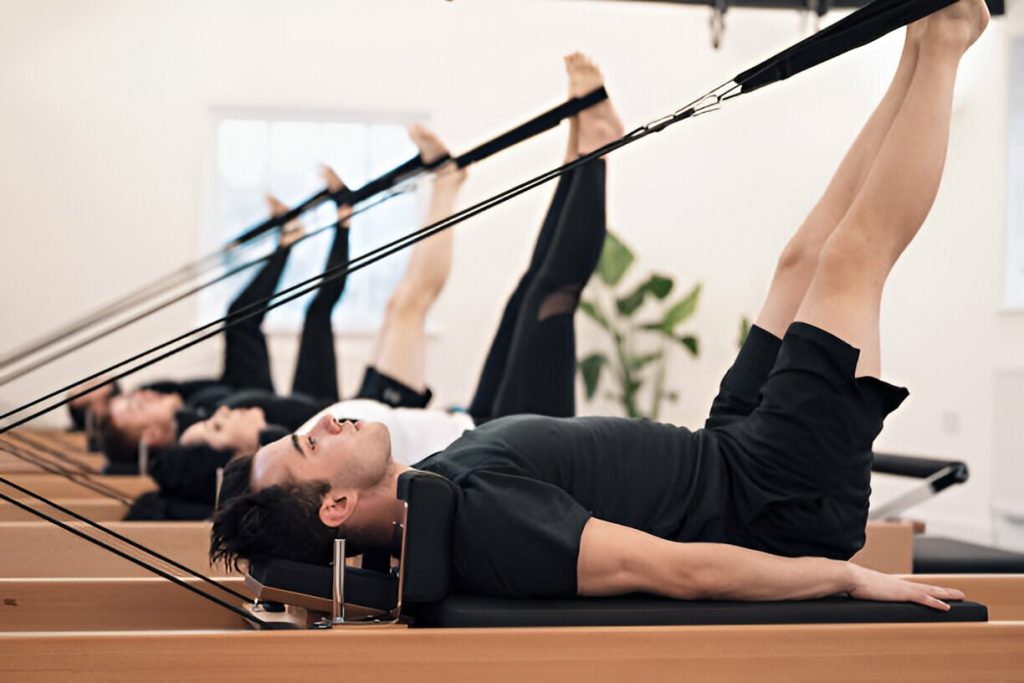
The Pilates reformer is often praised for its ability to sculpt long, lean muscles and improve flexibility. However, beneath its graceful movements lies a profound scientific foundation rooted in biomechanics, neuromuscular activation, and kinetic chain integration. For those seeking a deeper understanding, the science behind the pilates reformer reveals why this seemingly simple equipment is such a transformative tool in physical conditioning.
The Role of Biomechanics in Reformer Pilates
Biomechanics is the study of how the human body moves, applying principles of physics to biological systems. In reformer pilates, biomechanical precision is critical. Every movement is designed to align the skeletal structure, engage stabilising muscles, and promote efficient, injury-free motion.
When an individual performs exercises on the reformer, the dynamic resistance of springs challenges both the concentric (shortening) and eccentric (lengthening) phases of muscle contraction. Unlike traditional gym machines that often isolate muscles in fixed planes, the reformer demands multi-planar movement, replicating the complex ways humans move in daily life and sport.
- Joint Alignment: Proper alignment reduces shear forces on joints, protecting ligaments and cartilage.
- Load Distribution: Springs allow adjustable resistance, enabling progressive loading without overwhelming delicate structures.
- Closed vs Open Kinetic Chains: The reformer offers both closed-chain (feet or hands fixed) and open-chain exercises, developing both stability and mobility simultaneously.
This nuanced biomechanical environment makes the reformer an exceptional platform for both rehabilitation and athletic performance enhancement.
Neuromuscular Activation: Firing Up the Right Muscles
At the core of reformer pilates lies neuromuscular activation—training the nervous system and muscular system to work together harmoniously. Many people unknowingly develop faulty movement patterns where dominant muscles overcompensate for weaker ones. This not only hampers performance but also increases injury risk.
Reformer pilates strategically re-educates movement patterns by:
- Engaging Deep Core Muscles: Targeting the transversus abdominis, pelvic floor, multifidus, and diaphragm as a coordinated unit.
- Activating Stabiliser Muscles: Strengthening small, often neglected muscles around joints that maintain alignment.
- Promoting Motor Control: Enhancing proprioception (body awareness) to fine-tune balance, coordination, and reflex responses.
This neurological rewiring ensures that everyday movements—and athletic efforts—become more efficient, powerful, and safe.
Fascial Connections and Myofascial Continuity
Recent advances in movement science have highlighted the importance of fascia—the connective tissue web that surrounds and links muscles, bones, nerves, and organs. Rather than functioning in isolation, muscles work in integrated chains through fascial connections.
The pilates reformer capitalises on this concept by promoting:
- Integrated Movement Patterns: Encouraging the body to move as one unit rather than isolating parts.
- Elastic Strength: Training muscles and fascia to store and release energy like a spring, enhancing athletic performance.
- Fascial Stretching: Lengthening fascial lines to improve flexibility and structural balance.
Movements such as the long spine stretch or the full-body coordination sequence activate myofascial slings that are essential for fluid, graceful, and powerful movement.
Core Stability Beyond Aesthetics
When people hear “core,” they often think of six-pack abs. In biomechanics, the core refers to a much deeper system that stabilises the spine, pelvis, and shoulder girdle.
Pilates reformer training meticulously develops this core system through:
- Static Stability: Holding neutral spine positions during dynamic limb movement.
- Dynamic Stability: Maintaining control during shifting loads and changing body positions.
- Segmental Control: Strengthening individual vertebral movements for spinal health.
These elements contribute not only to better posture but also to enhanced athletic prowess, reduced back pain, and improved movement efficiency.
The Spring Resistance: Variable and Intelligent Loading
One of the reformer’s unique features is its spring-based resistance. Unlike dumbbells or static weight machines, springs offer variable resistance that changes throughout the range of motion.
- Increased Challenge at End Ranges: Springs provide greater resistance as they stretch, helping strengthen vulnerable end ranges where injuries often occur.
- Controlled Assistance: In certain exercises, springs assist movement, making it easier to learn new motor patterns before progressing to full bodyweight resistance.
- Smooth Force Curves: Unlike weights that impose abrupt load transitions, springs create a fluid load curve that mirrors natural muscle recruitment patterns.
This intelligent resistance nurtures joint health, reduces impact on connective tissues, and promotes muscular endurance.
Joint Health and Low-Impact Loading
High-impact activities can stress joints, particularly the knees, hips, and lower back. The pilates reformer addresses this concern through carefully modulated loading strategies:
- Decompressive Forces: Exercises often involve partial bodyweight support, decreasing joint compression forces.
- Balanced Muscle Loading: Emphasis on opposing muscle groups ensures no single joint surface is excessively stressed.
- Range of Motion Training: Gradually improving joint mobility reduces stiffness and maintains lubrication.
These properties make the reformer ideal for not only injury prevention but also for athletes undergoing rehabilitation and individuals managing chronic joint conditions.
Breathing Mechanics and Diaphragmatic Control
Breathing is often an overlooked component of movement training. In reformer pilates, conscious breath control is integral to movement execution.
Breathing patterns during exercises influence:
- Core Activation: The diaphragm works in tandem with the deep core muscles, enhancing spinal stability.
- Movement Efficiency: Proper breathing oxygenates muscles, delays fatigue, and sustains performance.
- Mental Focus: Controlled breathing activates the parasympathetic nervous system, sharpening concentration and relaxation during challenging sequences.
Incorporating coordinated breathing with movement optimises neuromuscular function, fosters relaxation, and elevates overall training efficacy.
Pilates Reformer and the Kinetic Chain Concept
The kinetic chain refers to the idea that joints and muscles function as interconnected links. When one segment moves, it affects the entire chain.
The pilates reformer promotes healthy kinetic chain function by:
- Sequential Activation: Exercises like the footwork series teach the proper sequencing from foot to hip to core.
- Integrated Upper and Lower Body Coordination: Movements like pulling straps require harmonious interplay between scapular stabilisers and lumbar stabilisers.
- Energy Transfer Efficiency: Efficient chains translate into better power generation, agility, and resilience in sports and daily life.
Disruptions in the kinetic chain—whether through poor posture, weakness, or injury—can cascade into dysfunction and pain. Reformer training systematically addresses and corrects these imbalances.
How Pilates Reformer Influences Muscle Fibre Recruitment
Skeletal muscles are composed of different types of fibres—slow-twitch (endurance) and fast-twitch (power). The pilates reformer offers an ideal environment for optimising both:
- Slow-Twitch Activation: Sustained, controlled movements build endurance, particularly critical for postural muscles.
- Fast-Twitch Activation: Plyometric adaptations on the jump board, or fast-paced sequences, recruit power fibres for explosive strength.
By strategically varying tempo, resistance, and movement complexity, reformer workouts develop versatile muscular systems capable of endurance, strength, and quick responsiveness.
Choosing the Right Studio for a Scientific Pilates Experience
If one is serious about tapping into the scientific benefits of reformer pilates, choosing an informed, anatomy-focused studio is crucial. Studios such as Yoga Edition offer structured programmes led by instructors who understand biomechanics, fascial lines, and neuromuscular control, ensuring sessions that are both safe and profoundly effective.
Conclusion
Far from being just an elegant exercise modality, the pilates reformer is a scientifically sophisticated tool that taps into biomechanics, neuromuscular re-education, and kinetic chain theory. It creates an environment where movement quality triumphs over quantity, cultivating a body that is not only aesthetically balanced but functionally superior. For those who value not just how they look but how they move and feel, understanding the science behind the reformer unlocks its true transformative potential.