

Modern daily life places unique demands on the human body. Prolonged sitting at office desks, repetitive movement patterns, and constant exposure to digital screens often result in stiff joints, chronic back tension, and poor postural alignment. Over time, these subtle physical stressors accumulate, leading to decreased mobility, muscular imbalances, and systemic fatigue.
Integrating a regular yoga practice into your daily routine offers a gentle yet highly effective path toward restoring physical equilibrium. Far from being an exclusive discipline reserved for naturally flexible individuals, yoga is a versatile system of movement accessible to practitioners of all fitness levels. By combining targeted physical postures, conscious breathwork, and structured movement, beginners can build functional strength, expand joint range of motion, and foster lifelong physical resilience.
Understanding the Physical Benefits of Daily Yoga
Yoga operates on principles of functional movement, strengthening muscles while simultaneously elongating them through dynamic and static holds. Unlike high-impact workouts that place intense mechanical stress on joint structures, yoga promotes fluid joint movement and reinforces the surrounding connective tissues.
Regular practice stimulates circulation, aiding in the efficient delivery of oxygen and vital nutrients to muscular tissues while supporting natural lymphatic drainage. Furthermore, the deliberate alignment required in yoga postures heightens proprioception—the body’s awareness of its position in space. This improved spatial awareness refines posture, enhances balance, and significantly reduces the risk of accidental slips or strains during everyday activities.
Essential Foundational Postures for Beginners
Starting a yoga journey requires mastering a core set of foundational postures. These poses form the building blocks for more dynamic flows and provide immediate functional benefits for daily physical health.
Mountain Pose or Tadasana
Although Mountain Pose appears simple at first glance, it serves as the ultimate blueprint for proper standing posture and body alignment.
- Stand with your feet together or hip-width apart, distributing your weight evenly across both soles.
- Engage your thigh muscles and draw your knee caps upward slightly without locking your knee joints.
- Tuck your pelvis slightly to maintain a neutral lower spine, drawing your abdominal muscles toward your backbone.
- Roll your shoulders back and down, opening your chest while allowing your arms to hang naturally at your sides with palms facing forward.
- Lengthen the back of your neck and gaze straight ahead, holding the pose for five to eight deep, steady breaths.
Downward-Facing Dog or Adho Mukha Svanasana
This iconic inversion stretches the entire posterior chain of the body, lengthening the hamstrings, calves, and spine while strengthening the shoulders and wrists.
- Begin on your hands and knees in a tabletop position, placing your wrists beneath your shoulders and knees under your hips.
- Spread your fingers wide and press firmly through the palms and index finger knuckles.
- Exhale as you lift your knees off the floor, reaching your tailbone up toward the ceiling to form an inverted V shape with your body.
- Keep a slight bend in your knees if your hamstrings feel tight, prioritizing a long, flat back over straight legs.
- Press your heels gently toward the ground while keeping your head relaxed between your upper arms.
- Hold the posture for five to ten complete breath cycles.
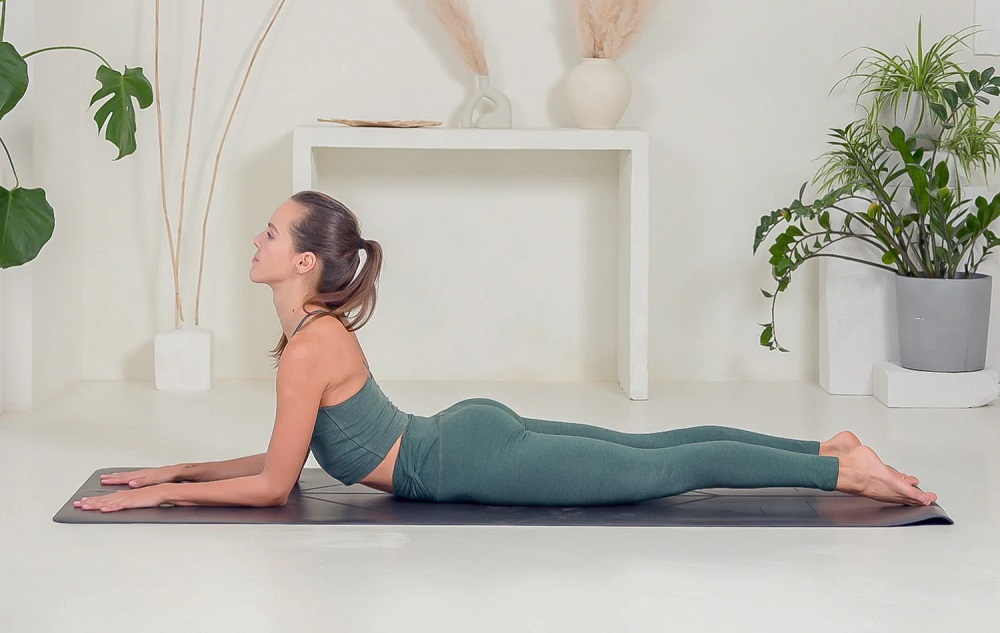
Cobra Pose or Bhujangasana
Cobra Pose offers a gentle backbend that counters the hunched forward position common in desk-bound lifestyles, strengthening the spine and opening the chest.
- Lie face down on your mat with your legs extended straight behind you, tops of your feet resting on the floor.
- Place your hands on the mat directly beneath your shoulders, hugging your elbows close to your torso.
- Inhale as you press firmly into your hands, lifting your chest off the floor using the strength of your back muscles rather than pushing aggressively with your arms.
- Keep your shoulders relaxed away from your ears and your gaze directed slightly forward and downward to preserve a long neck.
- Hold for three to five breaths before gently lowering back down to the mat on an exhale.
A Balanced Daily Beginner Sequence
To achieve maximum benefit, individual postures can be combined into a seamless, accessible routine. The following sequence balances dynamic movement with static stretching, making it ideal for morning or evening practice.
- Centering and Warm-Up: Begin in a comfortable cross-legged seated position. Spend two minutes focusing on slow, deep abdominal breathing to calm the nervous system and prepare the mind.
- Cat-Cow Dynamic Warm-Up: Move to a tabletop position. Inhale as you arch your back and lift your chest for Cow Pose; exhale as you round your spine toward the ceiling and tuck your chin for Cat Pose. Repeat for eight to ten fluid cycles.
- Standing Flow: Transition from Cat-Cow directly into Downward-Facing Dog. Walk your feet forward to meet your hands, moving into a Standing Forward Bend. Inhale to sweep your arms overhead and rise into Mountain Pose.
- Core and Hip Integration: From Mountain Pose, step your right foot back into a Low Lunge, dropping your back knee to the floor to open tight hip flexors. Hold for five breaths, then repeat on the opposite side.
- Cool-Down and Spinal Twist: Return to a seated position and extend your legs straight ahead. Fold gently forward from the hips to stretch the hamstrings. Finish with a gentle seated spinal twist on both sides to release lower back tension.
- Final Relaxation or Savasana: Lie flat on your back with your legs comfortably apart and arms resting at your sides, palms facing up. Close your eyes and remain still for three to five minutes, allowing your body to process the physical benefits of the practice.
Practical Tips for Sustainable Progress
Building a lasting yoga practice relies on consistency, patience, and proper technique rather than forcing advanced physical flexibility. Adopting a mindful approach ensures long-term safety and enjoyment.
- Prioritize consistent, short sessions of ten to twenty minutes daily over occasional, lengthy workouts once a week.
- Honor your body’s current limitations and avoid forcing your joints into uncomfortable positions or feeling sharp pain.
- Utilize supportive props such as foam blocks, woven straps, or folded blankets to modify difficult postures and maintain structural alignment.
- Coordinate your movements with your breath, inhaling during expanding or lifting movements and exhaling during folding or deepening stretches.
- Practice on a non-slip sticky mat to ensure stable footing and protect your joints against hard flooring surfaces.
Frequently Asked Questions
Do you need to be naturally flexible to start practicing yoga?
No, natural flexibility is not a prerequisite for practicing yoga. Flexibility is a result of consistent practice rather than a requirement to begin. Yoga postures are designed to meet your body at its current range of motion, gradually lengthening tight muscles over time.
How often should a complete beginner practice yoga each week?
For a complete beginner, practicing two to three times a week provides an excellent starting foundation. As your endurance and body awareness improve, you can transition into short daily sessions of ten to twenty minutes to maintain fluid joint mobility.
Can yoga help relieve chronic lower back pain?
Yes, gentle yoga can be highly effective for managing lower back pain. Postures that strengthen deep core muscles, open tight hip flexors, and gently mobilize the spine relieve excessive mechanical stress placed on the lumbar region.
Is it safe to practice yoga if you have joint stiffness or arthritis?
Yoga is generally very safe for individuals with joint stiffness when practiced mindfully. Modified gentle movements increase circulation to joint capsules and lubricate cartilage. However, you should consult a healthcare provider before starting and avoid positions that cause active pain.
What is the best time of day for a beginner to practice yoga?
The best time to practice yoga is whenever you can consistently fit it into your personal daily schedule. Morning practices help awaken stiff muscles and energize the mind, while evening sessions help relieve accumulated physical tension and prepare the body for restful sleep.
Is yoga alone sufficient for building physical strength?
Yoga builds functional, isometric strength and muscular endurance using your own body weight. While it provides excellent foundational strength, combining yoga with complementary low-impact activities like walking or light resistance training creates a well-rounded fitness regimen.